
Living at home
Staying home vs residential aged care: making sense of the costs
Why the comparison matters
When stairs, tight bathrooms or multiple levels start to make a home difficult to live in, moving into residential aged care can start to look like the only option. It's worth understanding how the two paths actually compare before deciding — because for many people, staying at home turns out to be more workable than they first assumed.
What residential aged care costs cover
Residential aged care in Australia is funded through a mix of government support and resident contributions. Every resident pays a basic daily fee, set and reviewed regularly by the Australian Government. Depending on your means, you may also pay an accommodation payment, a hotelling contribution and a non-clinical care contribution. People who were already in care before 1 November 2025 generally stay on the earlier fee rules.
Rates, thresholds and caps are set and updated by the Australian Government and change over time — myagedcare.gov.au always has the current figures, which is a better source than any article that isn’t updated in step with them.
The accommodation payment: RAD and DAP
The accommodation payment can be structured a few different ways. A Refundable Accommodation Deposit (RAD) is a lump sum paid up front. For anyone entering care from 1 November 2025, the provider keeps two per cent of it a year for up to five years, and the balance is refunded when you leave care. A Daily Accommodation Payment (DAP) is an ongoing daily charge instead of a lump sum — and the two can also be combined, paying part as a lump sum and the rest as a daily charge.
Care fees are means-tested
On top of the basic daily fee and accommodation payment, you may pay a hotelling contribution and a non-clinical care contribution, depending on your income and assets. The non-clinical care contribution stops once you reach a lifetime cap or after four years, whichever comes first. Because these figures are assessed individually and change over time, My Aged Care or a financial adviser can give you an accurate picture for your situation.
What staying at home actually costs
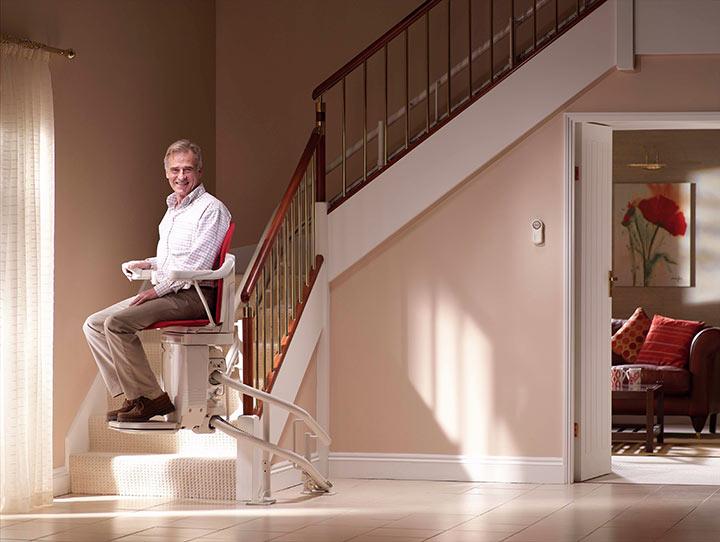
Staying at home shifts the cost picture to a different set of things: any modifications your home needs — like a stairlift, a home lift or an Inclinator™ — plus any in-home care or support you bring in. For some people that adds up to less than residential care; for others, it doesn't. There isn't a single right answer here — it depends on your home, your care needs and your finances.
Weighing up an access solution
If a difficult staircase or a change in level is the main thing pushing you toward a move, it's worth weighing an access solution against it as one of the costs on the table. We don't publish prices, because every home is different — a free, no-obligation home assessment gets you an accurate, emailed price guide to weigh up alongside everything else.
This guide is general information only, not financial advice. For your situation, talk to My Aged Care, a financial adviser, or Services Australia.
Want to see our full range of home lifts? Explore home lifts or talk it through with our team.